Technical Foundational Work
2016
Disney - Frozen II

Disney Frozen II: The Topology That Became the Standard
TLDR: A universal biped topology I had been building at home as a personal project, ground-up from the problems the existing studio mesh wasn't solving. When I joined Gigantic in late 2016, the show had a short window to improve the biped foundation every department worked on top of. I presented the personal topology as an alternative, paired with a landmark system giving every edge loop a meaningful, consistent identity across subdivision levels. Gigantic was canceled in spring 2017, and show leadership moved to Frozen II carrying the topology with them. Frozen II (2019) shipped as the first film built on it. Seven years later, the same topology is the studio's human-character standard across Raya, Encanto, Strange World, Wish, and current production. The foundation every biped at Disney Animation has stood on since is the contribution.
DETAILS
Studio: Walt Disney Animation Studios
Project: Frozen II (first shipped film built on the topology)
Role: Characters Foundational Work
Tools: Maya, ZBrush, Python
Year: 2016-2019 (topology developed 2016, presented to Gigantic late 2016 / early 2017, first shipped on Frozen II 2019)
Shipped: Universal biped topology + landmark system, adopted as Disney Animation's studio standard for human characters
Productions running on the topology: Frozen II (2019), Raya and the Last Dragon (2021), Encanto (2021), Strange World (2022), Wish (2023), current production
Links: IMDb
THE CONTEXT
Every character at Disney Animation starts from a base mesh. The topology of that mesh determines how efficiently every department downstream does its work. Modelers sculpt on it. TDs rig it. Animators deform it. Look dev surfaces it. Crowds instance it. If the topology is right, every department works faster, with fewer surprises, and the quality bar holds more easily across the show. If it's wrong, every department pays the cost, on every character, on every production.
I joined the Gigantic team in late 2016. This was Gigantic's third production start after prior restarts, and part of the early ramp-up was addressing foundational pipeline issues that previous iterations had inherited but never resolved. The biped topology was one of them. The existing mesh had been the studio standard for years, but the Character TD department had never loved it, and the show had a short window to improve it before production ramped up.
THE CHALLENGES
The existing topology had landmark inconsistencies across subdivision stages. Features that existed at higher SubD levels disappeared at lower levels, the nasolabial fold being the most visible example: a defined crease at the final mesh, and completely gone at the lowest level. Artists couldn't trust the low-res proxy to represent the same shapes as the final mesh, and this inconsistency transcended model deliveries, producing inconsistencies over Character TD work.
The cost cascaded across departments. Modelers sculpting at one level and previewing at another were chasing inconsistencies that weren't in their craft, they were in the underlying mesh. Rigs built assuming a stable loop structure had to compensate for loops that shifted or slid under subdivision. Every department absorbed a small tax, every character paid it, every show paid it again from scratch. The previous topology had been the standard for years, long enough that the tax had become invisible by habit. Everyone had learned to work around it, which is its own kind of quiet cost.
THE APPROACH
Presenting the alternative
The allocated window on Gigantic was meant for iterating on the existing topology. Days or weeks of incremental improvement on a mesh whose problems were structural, not cosmetic. Incremental improvements would have addressed symptoms at best, and the next production start after Gigantic would have inherited the same cascading tax all over again.
I had been building a biped topology base mesh at home for my personal projects, ground-up from the foundations of my career experience, and from the problems all of the studios weren't solving: consistent landmarks across subdivision stages, clean edge flow through the facial and body regions, and a density and distribution balance that rigging, deformation, and crowds could all work on top of without fighting each other. The personal mesh had been sitting on my home machine for a while, iterated on outside work hours, refined against the specific pain points the existing topology carried. When the Gigantic window opened, I brought it in as an alternative to the iteration plan.
I presented the topology to show and department leadership. They had one note: adjust the hips in order to continue the layout they already knew from the previous one, which carried less detail in that area, "less revealing" with simpler shapes there. I made the change. The mesh was adopted. The hip note was an aesthetic/cosmetic safer preference, not a structural topological issue.
The landmark system
The topology came paired with landmarks: semantic visual references that modelers and character TDs could load alongside the mesh, giving every edge loop a consistent identity that stayed coherent across subdivision levels and characters.
The nasolabial loop would always be the same loop, on every character, at every subdivision level. Same for the entire body. The brow, the jawline, the neck, the shoulder yoke, the spine, the knee, the ankle, all identified, all stable, all findable. Instead of landmarks drifting or disappearing between SubD stages or models, every loop became predictable and self-documenting. A topology is only as good as how consistently it's used across a department, and the landmark system removed the interpretation gap. New artists onboarded faster because the mesh was self-documenting. For a department that builds rigs, deformers, crowd instancing, and downstream automation on top of the mesh, predictability is everything.
Surviving Gigantic's cancellation
Gigantic was canceled around April/May 2017 for reasons far upstream of the production team's work. Most of the show leadership moved to Frozen II, and they carried over the solutions they had adopted during ramp-up, including the biped topology and the landmark system. Something that had started as a personal project at home was now traveling between productions on the trust of the leadership that had chosen to adopt it.
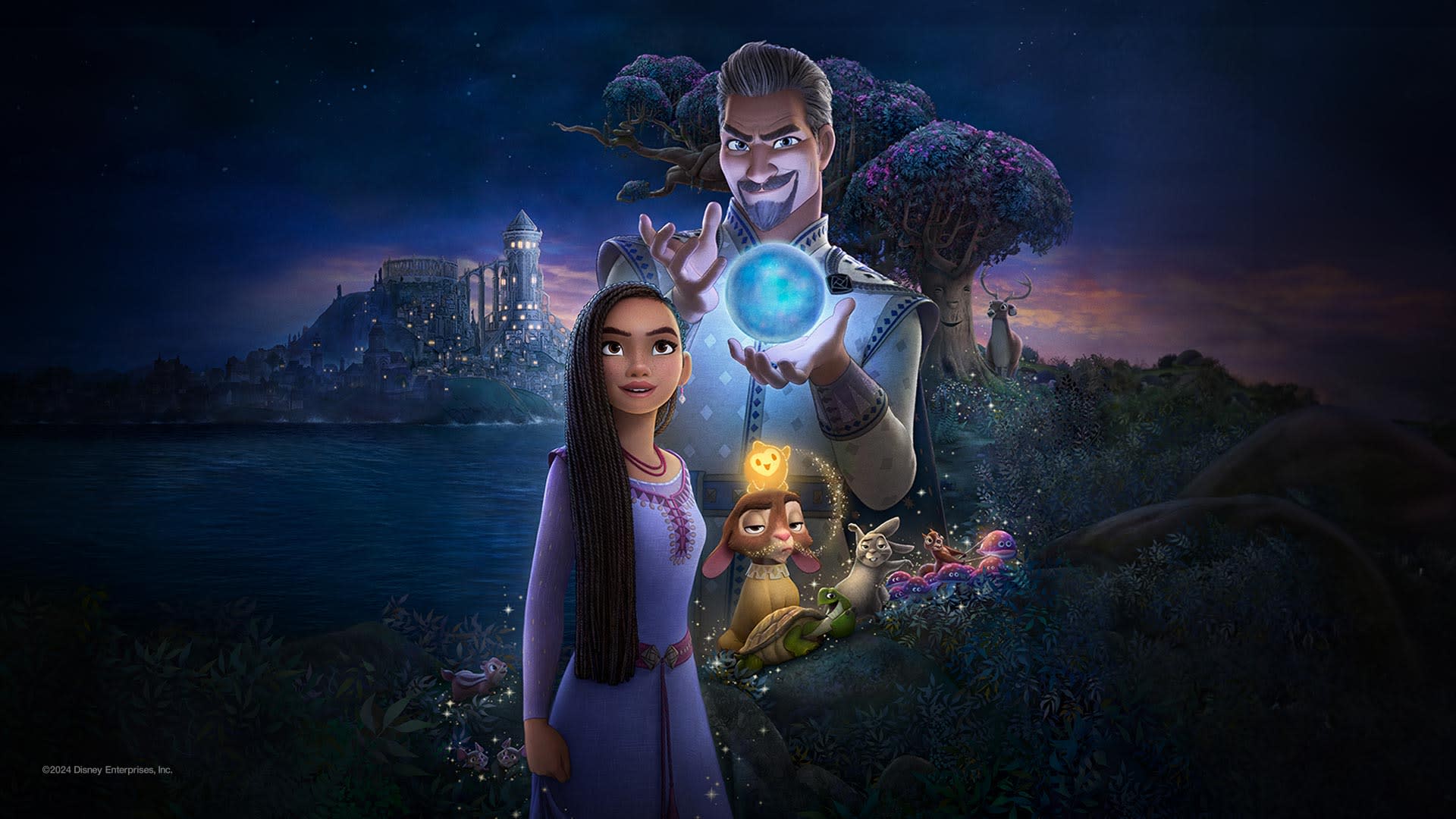
Frozen II became the first shipped film built on the universal biped topology. Every human character in the film stood on the same foundational mesh. From that point forward, it quietly became the studio standard, without a formal studio-wide adoption moment, just the next show inheriting it, and the show after that, and the show after that.
Shipping, and what it actually meant
Frozen II released November 22, 2019. Every human character in the film was built on the universal biped topology. I did not model any characters for Frozen II. My contribution was the foundation they all stood on.
The topology has been the studio standard for every biped character since: Raya and the Last Dragon (2021), Encanto (2021), Strange World (2022), Wish (2023), and the production currently in progress. Seven years and counting. A personal project that outlasted the show it was built for, and that has now anchored every human character on screen across five shipped Disney Animation features and the one currently in production.
On Encanto, the same topology proved flexible enough for biped-to-animal shape-shifting transition: a single mesh transforming from human proportions into a horse, a donkey, a capybara, all while maintaining deformation integrity and without retopology. That concept was eventually cut from the film, but the feasibility test proved the topology's range far beyond what it was ever designed to carry.
What started as a personal project at home, something I built because the existing mesh wasn't what I would have built myself, quietly became the foundation every human character at Disney Animation has been built on since. That shift from personal work to studio infrastructure is not a moment you notice while it's happening. You notice it years later, when a colleague on a different show references "the base mesh" and means yours, a silent testament of what started at home as passion work.