Art Director, Avatars
2022-2026
Meta - Horizon Avatars
Meta Avatars: A Character System for 2 Billion Users
TLDR: Joined Meta Reality Labs in October 2022 out of almost a decade at Disney Animation. The brief was a ground-up redesign of the avatar system carrying over a billion users across Facebook, Instagram, WhatsApp, Messenger, and Horizon. No approved visual direction when I arrived, and the 2D-concept-first process was not clicking at a tech company. I set the creative vision for what the avatars should become and proved it directly, sculpting the new design language into six 3D maquettes that became the north star the whole org built toward, a more mature and sophisticated language than the avatar style users had been mocking. That direction became Meta Avatars 2.0, what we called Style 2.0 internally. Promoted to Art Director as the scope formalized, I owned the visual identity and directed the architecture of the parametric systems built to carry it at scale: a new neutral head, roughly 150 face parameters, a body system with ten regions and 250+ identity shapes after Aspirational Bodies, FACS expressions, and the ML pipeline that turns a selfie into an avatar on style. Quality held across internal teams, ML pipelines, and vendor studios on three continents. Representation score landed at 3.8 at launch and 4.0 after Aspirational Bodies, against a 3.0 target. 72% user preference. 300%+ Messenger usage spike. This fundamentally pivoted Meta’s digital identity away from a publicly mocked aesthetic into a premium, universally appealing character language.
DETAILS
Studio: Meta Reality Labs (Meta's XR organization)
Project: Horizon Avatars, Meta Avatars 2.0 (internally Style 2.0), launched at Meta Connect, plus Aspirational Bodies follow-up
Role: Art Director, Avatars (promoted from Character Art Lead)
Scale: 1B+ avatars across Facebook, Instagram, WhatsApp, Messenger, and Horizon
Tools: Maya, ZBrush, Python, USD
Year: 2022-2026
Partners: Visual development team, ML researchers, tech art and engineering, product and UXR, and vendor studios on three continents
Leadership scope: Directed cross-functional execution across visual development, tech art, engineering, ML research, product, and UXR. Drove a 30,000+ annotation data effort across international vendor studios on three continents. Aligned internal art directors and team members to a single quality bar through structured lectures, core documentation, and global review sessions.
Shipped: Meta Avatars 2.0 visual redesign across every Meta platform, Style 2.0 neutral head (LODprime), face parametric system (~150 parameters), body parametric system (10 regions, 250+ identity shapes after Aspirational Bodies), FACS expression layer authored on the canonical face (key action units plus corrective and combination shapes, split per side and quadrant, driving avatar stickers and live face tracking on Quest Pro), ML training pipeline that generates avatars from selfie input, style frameworks scaling consistent quality across internal teams, ML pipelines, and vendor studios on three continents, 16 new body presets across masculine and feminine archetypes, and face depth controls addressing structural representation gaps.
Results: Representation score 3.8 at launch, reaching 4.0 after Aspirational Bodies, against a 3.0 target. 72% user preference in qualitative study. 300%+ Messenger usage spike after rollout.
Links: Meta Connect 2024, Meta Avatars 2.0
THE CONTEXT
Meta's avatars are the digital identity layer across Facebook, Instagram, WhatsApp, Messenger, and Horizon. Over a billion avatars created by users. When someone creates an avatar, that character becomes how they show up across every Meta product. Their face in a video call, their presence in a Story reaction, their body in Horizon, their identity in chat, an emote in a thread.
I joined Meta Reality Labs in October 2022 as Character Art Lead, coming out of almost a decade at Disney Animation. The goal was simple to state and large to execute: define what the next generation of Meta avatars should look like, build the systems that would produce them at platform scale, and set the quality standard that every team touching avatars (internal, vendor, ML) would work against. There was no defined visual direction for what came next, and no framework for scaling quality once a direction was chosen. I set the creative vision and the visual strategy, made the calls that defined what the next generation of avatars would be, and proved the direction myself in the first maquettes. As the scope formalized, I was promoted to Art Director.
Directing a character on a film and directing a character at platform scale are not the same job, and not the same challenge. On a film, the character is one named individual, Mirabel, Asha, Sisu, whose design is tailored, reviewed, and crafted over months until it lands. At Meta, the character is every user, or as many characters as a user wants. A billion people creating their own self-representation, no two alike, all generated through a parametric system that has to hold up without a human reviewer in the loop for each one. The work shifts from crafting a specific designed face to designing a system whose applied rules guarantee that any generated face stays on style and above the established quality bar.
THE CHALLENGES
The existing avatar style had a fundamental problem. A low-fidelity cartoon with childlike proportions and a limited identity system that didn't resonate with users. The pain point became public when Mark Zuckerberg posted his own avatar in front of the Eiffel Tower to celebrate Horizon Worlds launching in Europe. The mockery was global and instant. The reaction to the post was the visible symptom of a problem the team had been measuring internally for months: users had expressed a low acceptance of Meta avatars at the time.
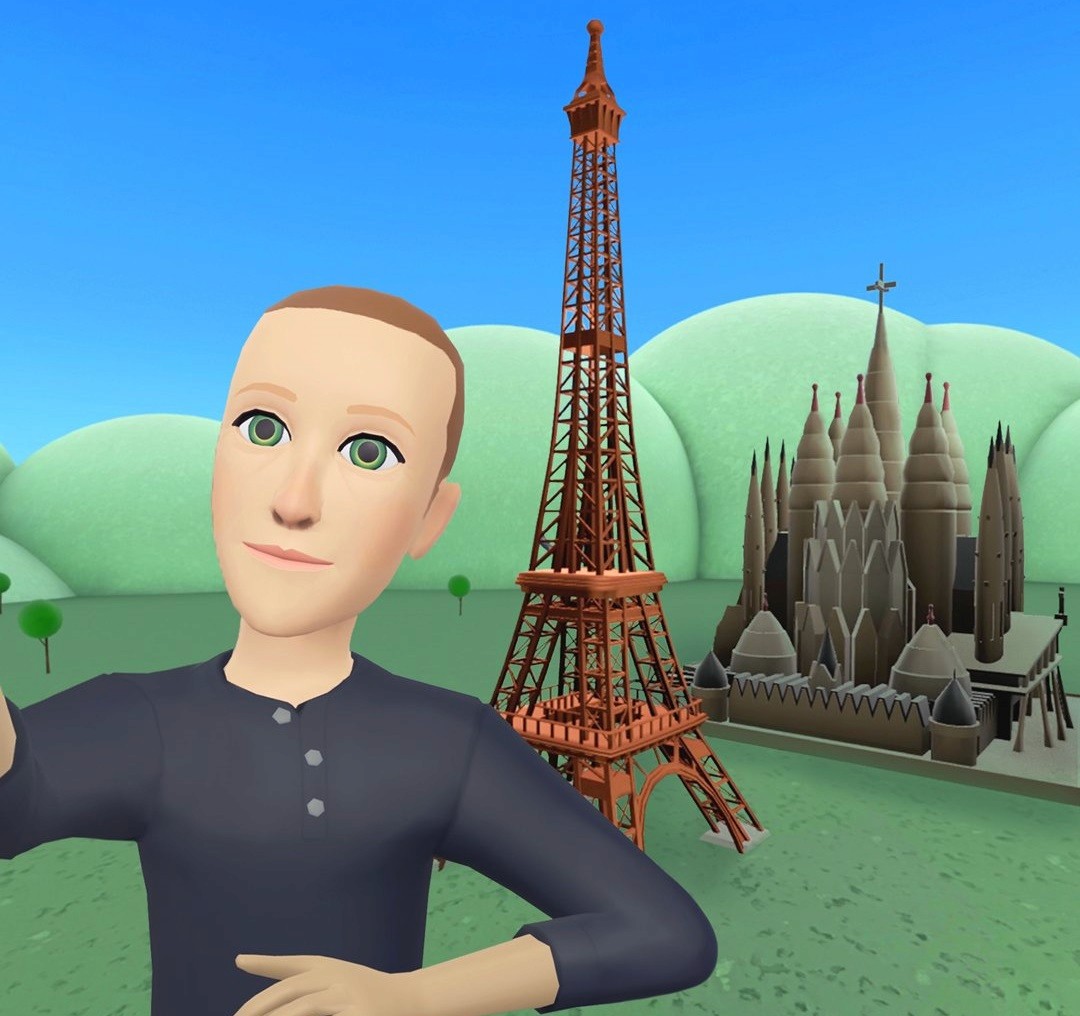
Mark Zuckerberg's avatar selfie, posted eleven days before my first day at Meta
Underneath the style issue was a structural one. The body system couldn't produce genuinely diverse body types. The face system couldn't represent users from underrepresented groups with real fidelity, especially in face structure, skin tones, and hair. Every surface symptom traced back to the same root: a style that didn't resonate, and a limited parametric architecture that wasn't built to carry the range of identities it was being asked to represent.
The platform needed a ground-up redesign of both the visual style and the parametric systems underneath it. Not a refresh. A rebuild.
THE APPROACH
Building the visual foundation
There was no approved execution path of any kind. No 2D, no 3D, no direction to build from, just the understanding that the style needed to mature somehow to find distance from the Eiffel Tower avatar, and for that we needed a materialized direction to build toward as an org.
The concept sketches and moodboards approach had already been tried for a while without landing on approval. The delta between the 2D designs and their 3D translation kept breaking, especially given the nature of the company. Studios with an art foundation are used to that process: concept 2D art, then 3D visual development, with the awareness that the back and forth not only materializes the concept but creates an organic evolution from the initial 2D. A tech company, and the leadership at Meta Reality Labs, is less familiar with that process, so for them not having a 1-to-1 solution was an unexpected surprise.
This was the core reason the avatars team brought me in. They were looking for someone who could drive visual exploration without needing a 2D-established direction first, and the direction they wanted already existed in my personal portfolio. The aesthetic that became Meta Avatars 2.0, internally Style 2.0, came from my own work. Leadership recognized it there and trusted me to bring it in, set the target, and build it out. The trust to run ahead of a traditional visdev process, at a tech company with no in-house precedent for it, is the kind of trust I do not forget.
My approach was direct-to-3D visual development sculpts, delivered in record time to establish the visual north star myself without the bumps of the back and forth, and without disrupting set expectations. So I brought the film and game studio practice of fully realized 3D maquettes to a platform product. Built six maquettes from scratch, each a different persona spanning gender, ethnicity, age, and background. These weren't just visual development. They were the system specification. Every downstream decision, from parametric ranges to ML training targets to vendor quality bars, was built against these references. If a future output didn't match what one of those six maquettes would look like in that configuration, the system wasn't working.
Once the maquette work concluded, the style crystallized around five principles that became the visual language for everything downstream. Strong first visual read, so the character registers instantly even when it is small in a chat thread. Graphic shapes, clean silhouettes that hold up at any size and in motion. Planarity, faces built from intentional planes instead of soft formless mush, so structure and light read clearly. Visual tension, the deliberate contrast in shape and proportion that keeps a face from collapsing into generic. And careful attention to proportions, distribution, and spacing, the small calls that separate a face you believe from one that feels off.
The balance toward stylization was deliberately uneven, elevating the new style to a language more mature and more sophisticated than the previous attempt, with more anatomy and naturalistic shapes, but staying far from uncanny territory. Clearly stylized, not attempting photorealism, but grounded enough in real physiology that a user could recognize themselves in the result. Stylized enough to live in a product at platform scale. Grounded enough to feel personal.
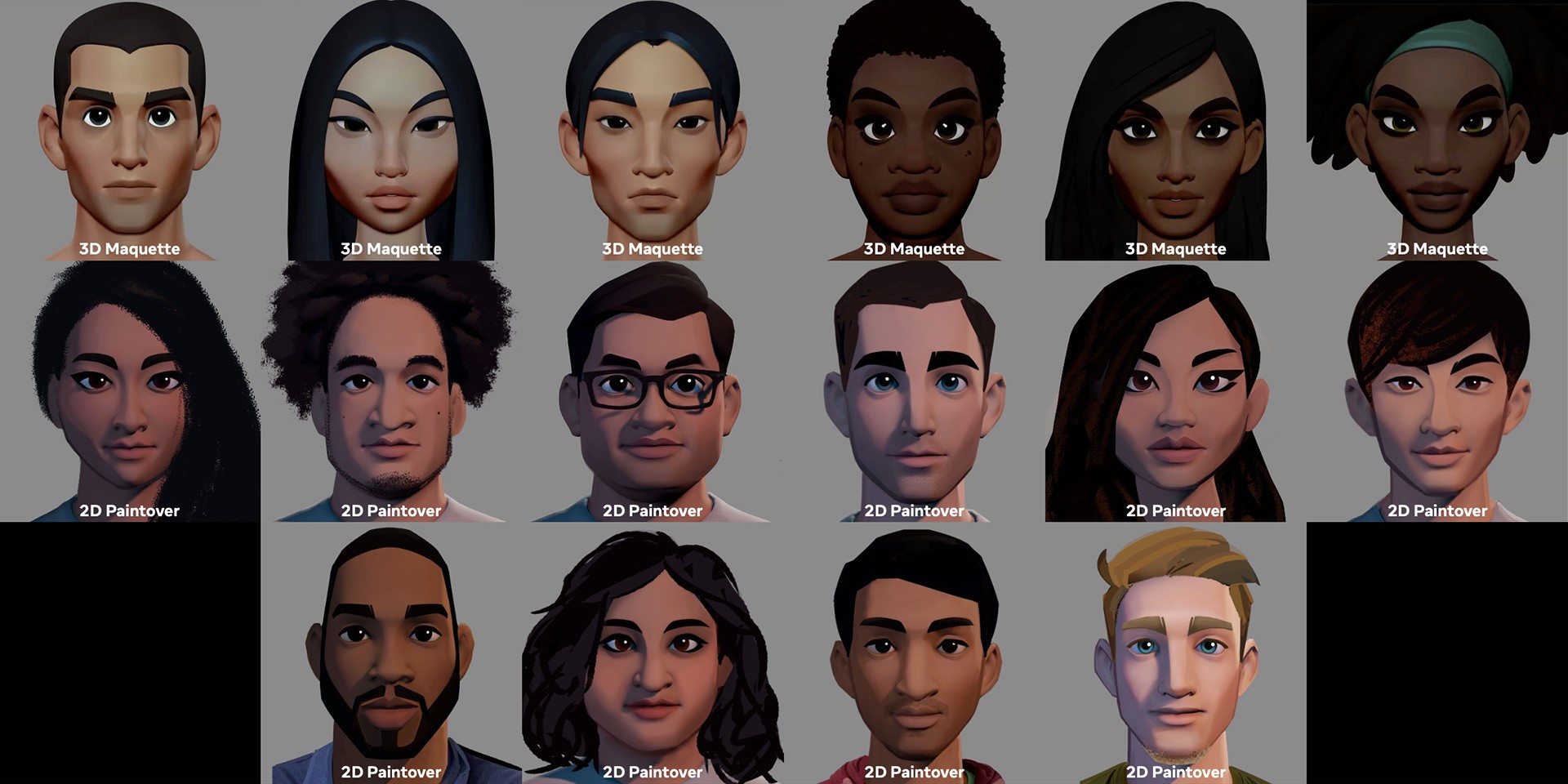
Some of the 3D sculpts and 2D paintovers I created to validate the new style across multiple identities and ethnicities
This shift in visual language is the heart of what changed. The old avatars read as a toy, low fidelity, flat, childlike in proportion, which is exactly why one screenshot in front of the Eiffel Tower could become a global punchline. The answer was not more detail, it was a more confident design language. I made the calls that set it: how far to push stylization, the proportions, the structural read the whole system would inherit. I drove the core of that language hands-on, sculpting the forms and shapes myself, and as Art Director directed the look, materials, and color so the surfaces, skin, hair, and palette matured in step with the forms. The result is a face that holds presence across every Meta surface, a video call, a Story reaction, a room in Horizon, rather than one that invites mockery.
The aesthetic shift, The Core Design Philosophy of Style 2.0 in concrete terms:
Planarity: Moving away from soft, formless "mush" to intentional structural planes that catch light dynamically across different engine renderers.
Visual Tension: Balancing graphic stylization with naturalistic proportions to ground characters in real physiology without hitting the uncanny valley.
Graphic Shapes: Defining clean, iconic silhouettes that remain instantly recognizable whether shrunk into a WhatsApp chat thread or viewed at scale in VR.*
Proportions: From childlike, toy-like ratios that read as a mascot to a grounded, stylized anatomy that holds presence across every Meta surface, from a chat thumbnail to a room in Horizon.
Look, Materials, and Color: As Art Director I directed how skin, hair, and eyes read across platforms, moving the surfaces from flat and low fidelity to a cohesive, more sophisticated shading and color language.
Facial Structure: Faces built from real structural planes and depth instead of generic rounded forms, the same structural language that later let the system represent genuine facial diversity rather than falling back on ethnicity-coded presets.
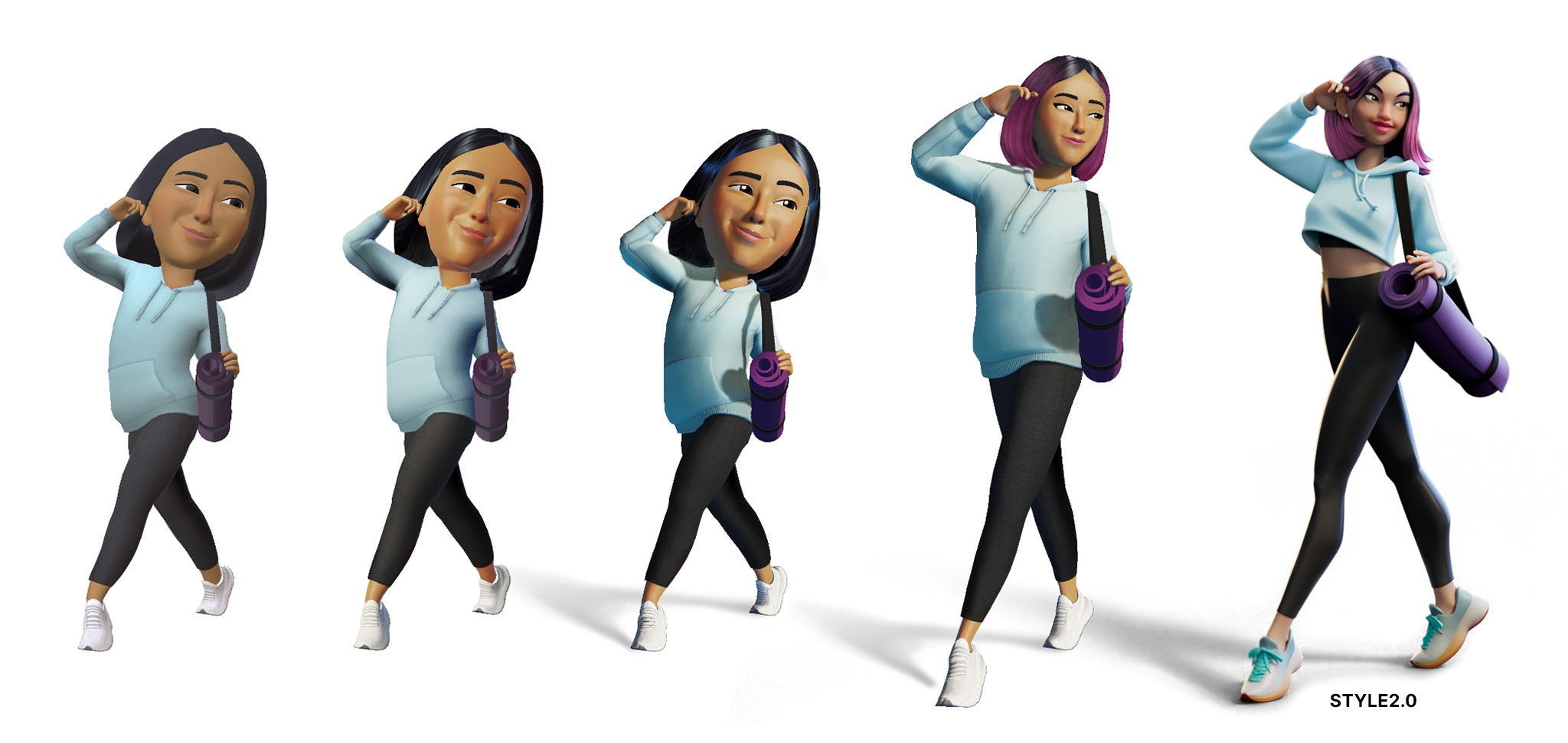
The evolution of Meta avatars over the years, with Avatars 2.0 (the focus of my work at Meta) on the far right
Architecting the parametric systems
As the style solidified, my role formalized into Art Director. The visual direction stayed the through-line the whole way, the systems below existed to deliver it. The scope expanded from defining the visual language to also owning the architecture of the parametric systems that would generate every user's face and body while holding that language intact. Five pieces had to land together for the system to function: a neutral/average body and head to anchor everything and become the canonical foundation for the system, a face parametric system, a body parametric system, a FACS expression layer, and an ML training pipeline that could learn a user's face identity from a picture and produce an automatic avatar interpretation that belonged to the style. Each one pushed the next, and all five had to hold up to the highest possible quality bar.
The neutral head. Before any parametric system could exist, the style needed a base mesh to run on top of, the canonical canvas that had to carry the aesthetic intact no matter how far the mesh deformed. I conceived and built the Style 2.0 base mesh, referred to internally as LODprime (on the assumption that other LODs would run in engine, while this one was the production-layer foundation). LODprime is the foundational topology that every rig, parametric nuance, blendshape, and animation would run on. Neutral but malleable enough to represent billions of users across the full range of ethnicities, ages, and shapes without breaking. Conservative enough that rigging and animation could trust its behavior under stylized deformation, while ensuring the identity layer stayed on top of the quality bar. This is the piece every other system quietly depends on. If the topology isn't the right one, too dense, too artifact-noisy, too many poles, not the right flow, not the right density for the contexts, everything downstream accumulates problems and fails. Getting it right was one of the highest-leverage decisions in the whole system at that early stage.
Face parametrics. I decomposed the face identity layer into roughly 150 independently controllable parameters, breaking the face down into micro shapes with minimal individual influence but enormous combined plasticity. The design choice was deliberately granular, to give us the nuance needed to represent billions of users. The parametric space is vast, and goes deep into face morphology. Giving full control over that space carried a risk: the system was capable of delivering high quality and representation bars, but in the hands of less experienced users, or even artists, it could produce undesirable, out-of-style outputs. We needed public safe rails.
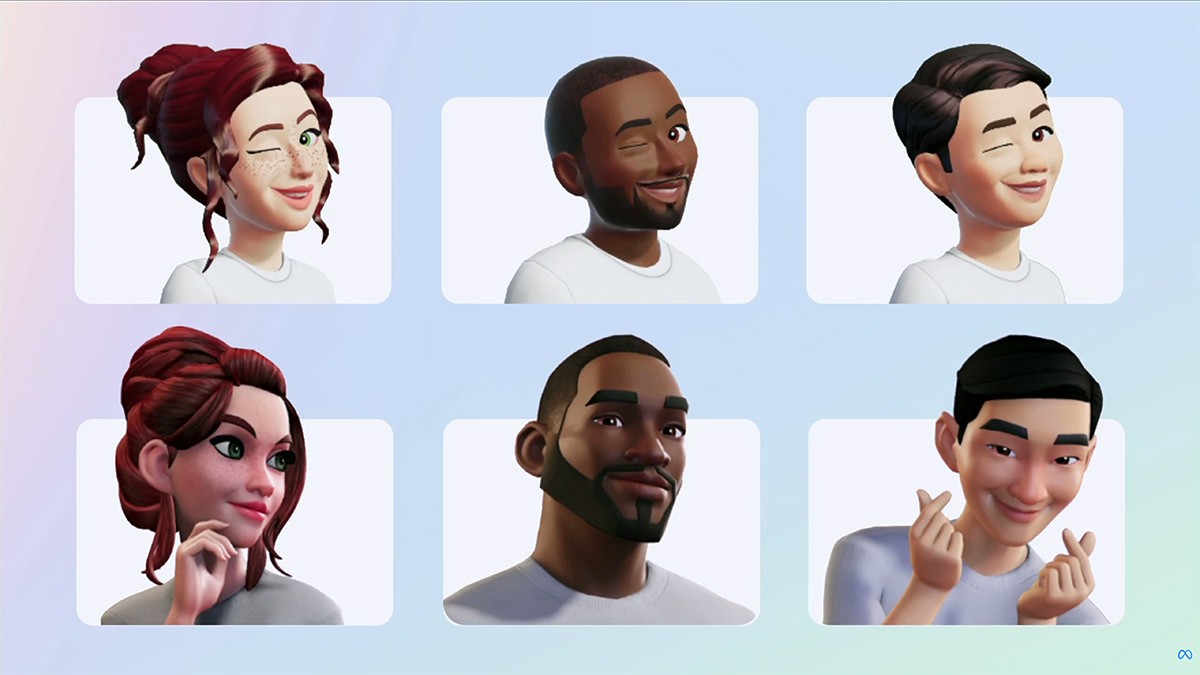
Image showcasing same identities with their style evolution. Avatars 1.0 on the top, 2.0 on the bottom
We adopted two decisions. On one side, users get a curated, fine-grained control surface that leverages the whole system underneath. On the other, the ML models get access to the full parameter space, large enough to represent real identity without collapsing into presets. The initial parameter list exposed to the user went through multiple stress-test rounds against real identities, validated by team and XFN partners and UXR research studies, and each round revealed gaps the design hadn't anticipated. After multiple rounds, the user-facing controls on the editor were formalized.
To ensure that billions of user-generated permutations could never break the core aesthetic, I developed a custom biometric style analysis. This mathematical framework served as an automated aesthetic guardrail, detecting out-of-style outputs and training the AI/ML model to 'think like an artist.'
This framework became the foundation for creating editor presets, defining how the parametric space dynamically shifts based on user selection, and guiding annotators as they generated synthetic training data. Ultimately, this enabled the ML model to accurately translate a user's selfie into an on-style avatar. I led this massive data scaling effort from the Art Direction side, overseeing 30,000+ annotations across multiple international vendors and driving the knowledge transfer through structured lectures, core documentation, and global review sessions across vendors, internal Art Directors, and team members.
Body parametrics. Composition axes, shape decomposition, and skeletal controls working together to produce the full range of body types within the style language. Built in Maya, validated through the same stress-testing methodology used for the face, handed off to engineering for integration. The body system is where the Aspirational Bodies work (below) later opened up significantly.
FACS expressions. An avatar system does not ship one face, it ships an identity layer multiplied into millions of user variations, and the visual language has to hold across every one of them, in product, in animations, in stickers, in first or third person embodiment. You cannot author a FACS set per user identity. So there is one library, and it lives on the canonical face, authored there before any identity layer entered the picture. That is what keeps the question the general one: how much articulation should a Meta avatar actually have, where does the range start reading as a real performance, and where does it start fighting the design.
The range itself was found on the maquettes, where exaggeration could be pushed with nothing downstream depending on it yet. Once the emotional vocabulary settled it came onto the canonical head as the shipping blendshape library. Neutral enough to stay compatible with any identity, while pushed enough to carry the visual language and the intent. The brief for the shapes was the same brief as for the forms. The visual language had to survive the face moving. A bold, graphic, planar design collapses quickly under expression if the shapes are authored realistically: the planes soften, the silhouette rounds off, and the character quietly turns into a generic styleless smiling head at exactly the moment it is supposed to be most expressive and readable. Every shape was directed to keep the same characteristic read as the neutral, structure held through the deformation, exaggeration pushed on purpose rather than tuned to anatomy alone. That meant breaking the FACS morphological rules, carrying the stylization inside the action units themselves and not only in the correctives layered over them.
The set follows FACS, decomposed into individual action units, brow lowerer, cheek raiser, dimpler, jaw drop, lip corner puller, lip funneler, lip pucker, nose wrinkler, upper lid raiser, and the rest of the vocabulary, plus a full layer of corrective and combination shapes for the places where two action units together do something neither does alone. Inner brow raiser with brow lowerer. Brow lowerer with cheek raiser, lid tightener, and eyes closed. Nose wrinkler with upper lip raiser and lower lip depressor. Those combinations are where a stylized face is won or lost, because that is where the recognizable emotions actually live, and they are the shapes a naturalistic solve gets wrong first. The master key shapes and correctives I designed and authored were then split down into face sides and quadrants, left and right, upper and lower, so the system could drive them independently and asymmetrically. That decomposition is also what maps the library onto the OpenXR face tracking model, where the face expression set is defined as FACS action units resolved per side.
ML training pipeline. I served as primary quality director for the ML model that translates a selfie into an avatar. This is the piece that turned the system into a product: a user takes a picture, the model returns an avatar, and that avatar has to feel both like them and like it belongs to the style. The real work was teaching the model to think like an artist, not just match features but translate a real face into the geometric language of Style 2.0 and make the same on-style calls I would make by hand. The evaluation framework established in Face parametrics fed the training; on top of it, I ran structured style sessions to align internal art directors on the same bar, and kept tuning the feedback loop as the model iterated. Human-in-the-loop ML direction at scale: define the target, build the process to get there, make the standard reproducible so the model can keep improving without me being the bottleneck on every decision.
Aspirational Bodies
After Style 2.0 launched, representation scores climbed substantially, especially on faces. The body system, though, hit a ceiling. Users could build a wider range of bodies than before, but the parametric space still struggled with specific physiques, especially athletic and muscular frames that the original architecture wasn't built to resolve cleanly.
Instead of patching the existing system, I designed and prototyped a completely new iteration. The previous system was limited from the beginning due to on-device performance concerns at the time, concerns that lifted during the path to 2.0 delivery. That gave me room for a completely new architecture: two main composition axes (thickness and fitness) with gender-specific shapes, ten independently controllable body regions, and extended skeletal capabilities to support the broader range. I built the prototype in Maya with a custom data-centric Python toolkit (procedural connections, pose switching, preset management, import and export) so the full iteration loop could run inside a single tool rather than across a chain of handoffs. This was crucial for setting the target of the new body parametric iterations and for defining the new body preset configurations users would see. Production happened in a 3.5-week sprint with tech art and engineering, which is fast for a system change at that depth, and only possible because the underlying body parametric architecture was already solid and the partner teams moved in lockstep with the prototype. Following the same process we had run early with faces (internal evaluations, UXR studies), we landed 16 new body presets across masculine and feminine archetypes.
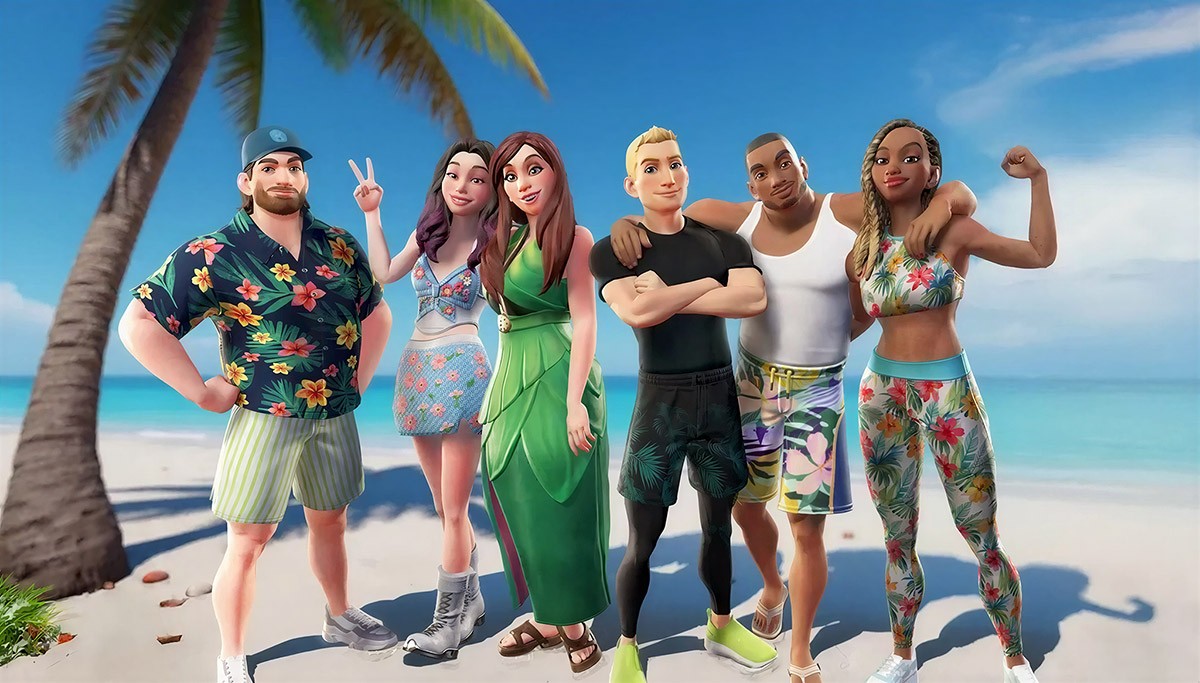
Group of Avatar 2.0 showcasing the Aspirational Bodies release
Pushing representation
Even with Style 2.0 live, localized gaps remained. While overall representation scores were strong, specific demographic groups and age ranges still struggled to find their likeness in the system. The editor was failing to capture the true nuances of identity, which live deeply within face structure, specifically face depth and bone morphology, rather than the surface-level, ethnicity-coded presets that most avatar systems fall back on.
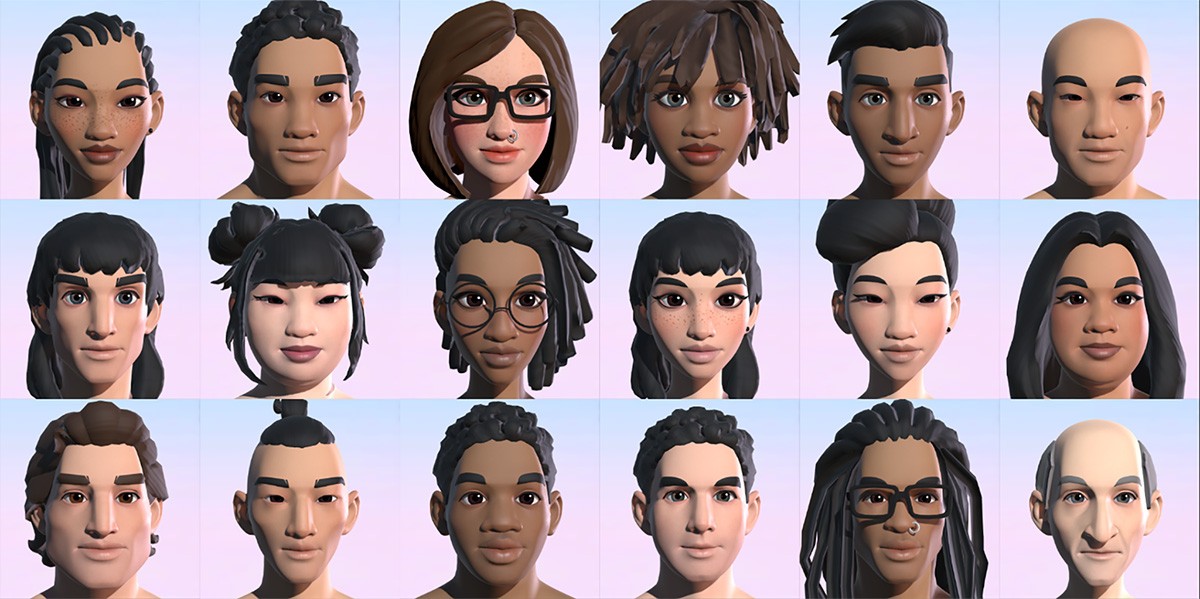
Identity examples of Avatars 2.0 parametric representation range
As an Art Director with a deep foundation in human anatomy, I recognized that our underlying parametric space already possessed the math to solve this; it simply hadn't been unlocked for the user. I rejected the standard industry fallback of creating more static preset categories, which would have resulted in a clumsy, tiered identity system. Instead, I used my craft expertise to isolate the exact structural gaps, designing and bundling a new set of advanced face-depth controls directly into the editor canvas. By exposing these foundational geometric axes, we empowered underserved demographics to sculpt authentic self-representations, successfully pulling representation scores above 4.0.
Shipping, and what it actually means
Meta Avatars 2.0 launched at Meta Connect and rolled out across every Meta platform. Over a billion avatars migrated to the new style during the rollout. The visual identity that had been a global punchline two years earlier was now the one users preferred. The key metrics cleared their targets:
Representation Score: Target was 3.0 on a 5-point scale. Landed at 3.8 at launch, reaching 4.0 after the Aspirational Bodies update.
User Preference: 72% preferred the new style in qualitative study.
Messenger Usage: 300%+ spike after rollout. 1
What shipped was the full stack behind those numbers, proving that elite artistry and platform systems must function as a single unit. The core deliverables included:
The Creative Vision:
A complete, mature visual identity redesign live across every Meta platform.
Face depth controls addressing the structural representation gaps for underserved demographics.
A comprehensive FACS expression layer defining how emotion behaves within the new style, authored on the canonical face and split per side and quadrant, shipping into avatar stickers and into live face tracking on Quest Pro and the other XR surfaces.
The Scaling Infrastructure:
The Style 2.0 neutral head (LODprime) as the canonical, production-ready topology.
A fine-grained face parametric system carrying roughly 150 independent parameters.
A body parametric system with 10 regions, 16 new presets, and 250+ identity shapes.
An automated ML training pipeline that translates a user selfie into an on-style avatar.
Scalable style frameworks making visual quality measurable and reproducible across internal and external pipelines.
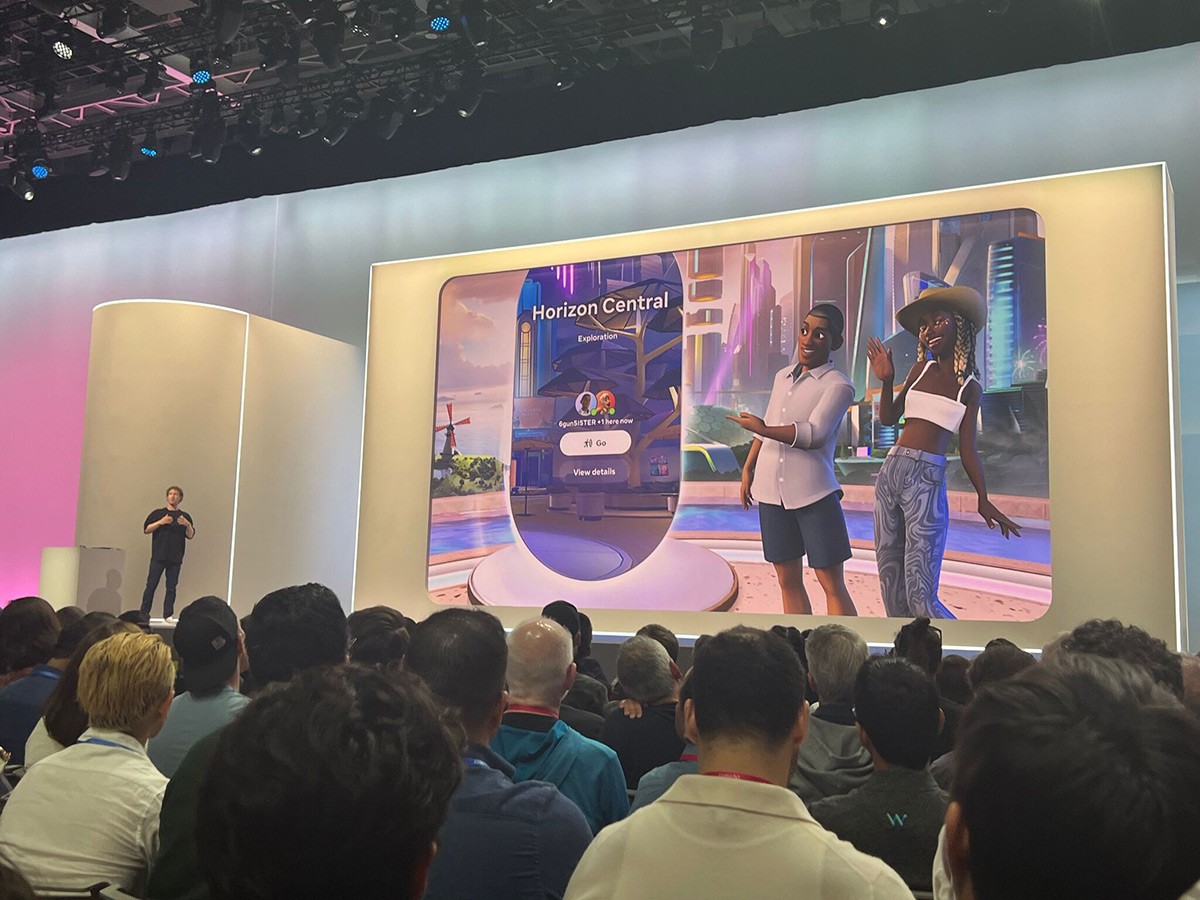
Mark Zuckerberg introducing new Avatars 2.0 during Meta's Connect 2024
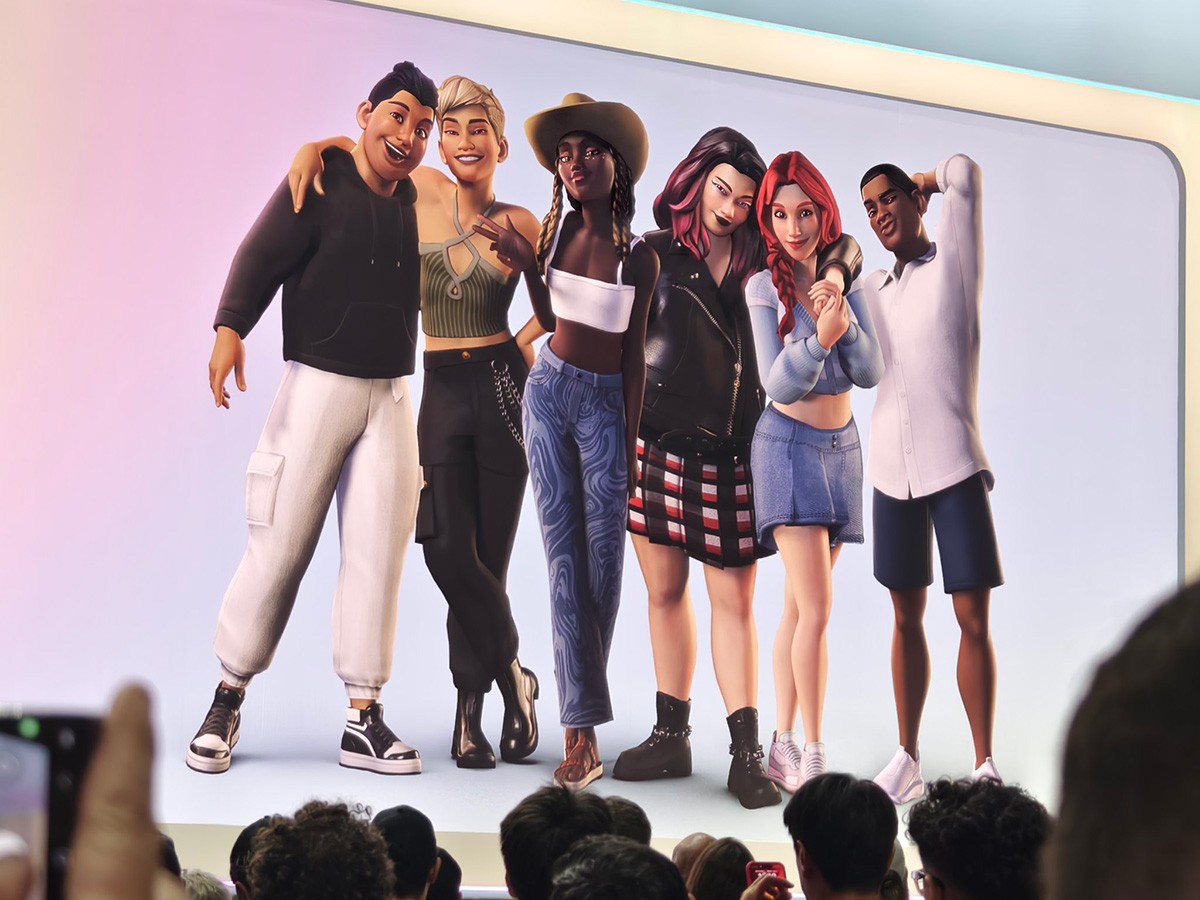
Featuring new Avatars 2.0 during Meta's Connect 2024
The scaling framework is the piece I am most proud of. Traditional art direction depends on a single person reviewing every output. That model works perfectly in film, where the asset count is finite and every frame passes through a human review chain. It breaks immediately at platform scale, where a system produces novel outputs continuously across multiple continents.
The structured style framework I designed worked as an automated aesthetic guardrail, the very thing that kept internal teams, ML pipelines, and vendor studios on three continents from quietly drifting off the visual identity I had set. By translating artistic intuition into precise geometric language that engineers and ML researchers could build against, style decisions could propagate autonomously through the system without routing every single call back through me.
None of this ships without strong partners. The art team who built against the maquettes, the tech art and engineering who turned my initial prototypes into shippable systems, the animation team who brought all this effort to life and pushed the performance bar across our stickers and real-time avatars, the ML researchers who trained and retrained the pipeline against the quality bar we had set together, the product and UXR partners who kept us grounded in what users actually needed, and the vendor studios on three continents who carried the style framework into production at scale. The character on screen is the visible part of this work. The system underneath is everybody's.
A billion avatars sounds like a number. It is also a billion small moments of someone looking at a screen and seeing themselves, or not, in the character that represents them to their family, their friends, their coworkers, and their communities. That is what platform-scale character work actually is: a responsibility, a craft problem, and the most meaningful extension of twenty years of character work that I could have asked for.