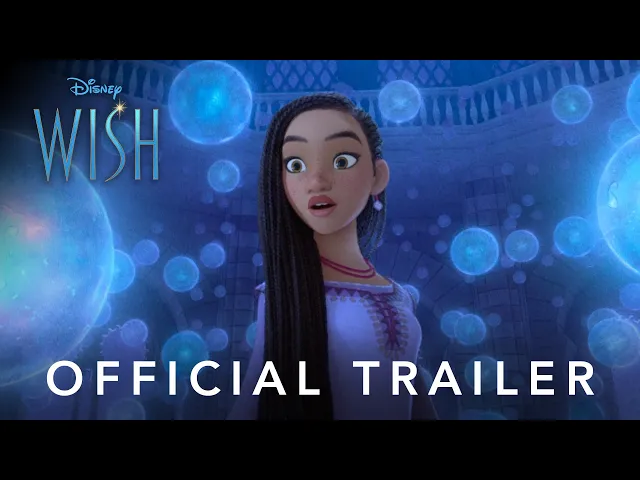
Character Modeling Supervisor & 3D Visual Development
2021-2022
Disney - Wish
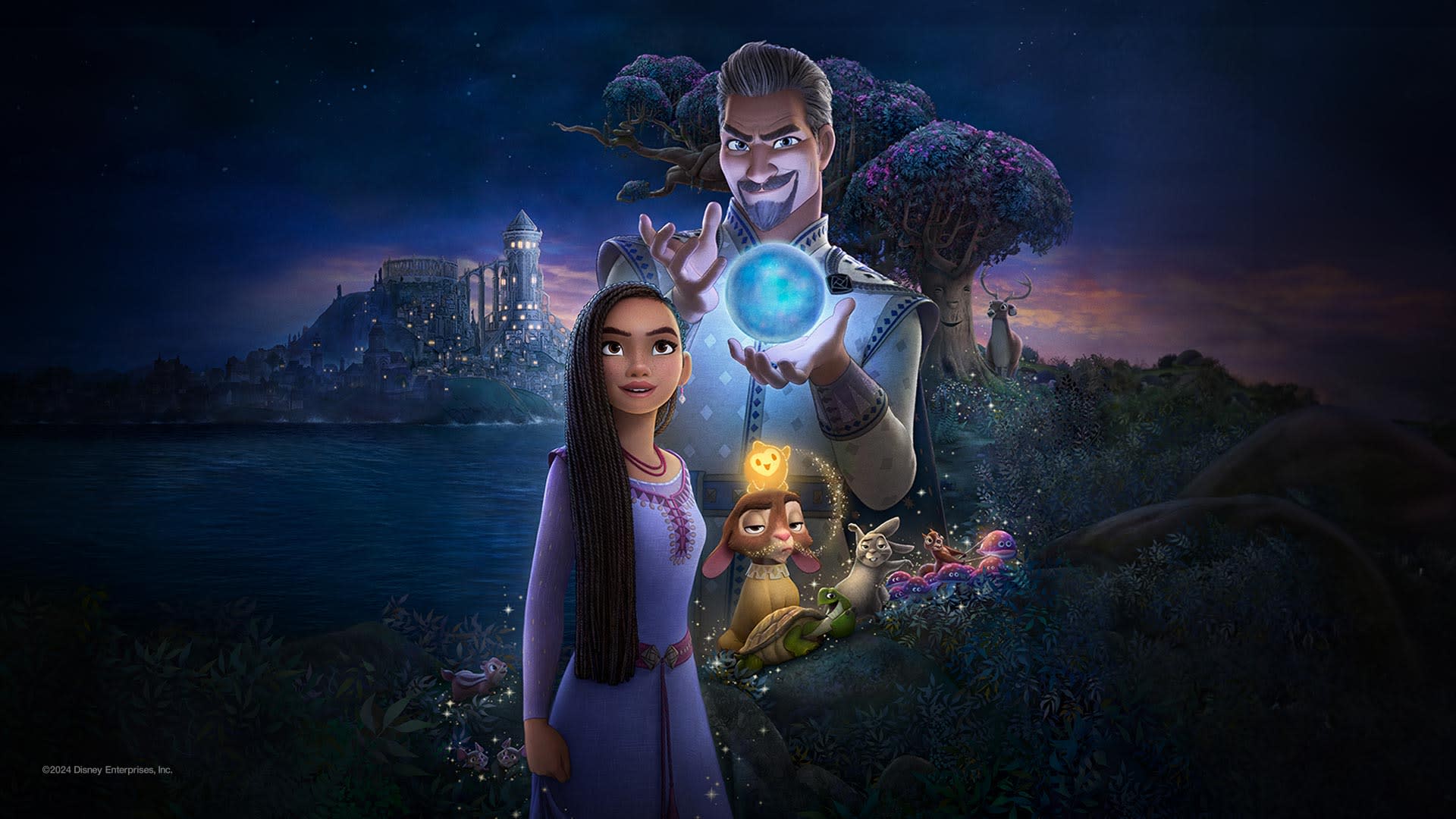
Disney Wish: Disney's 100th Anniversary Film
TLDR: Character Modeling Supervisor on Disney's 100th anniversary feature, managing a team of seven through a fully remote production. The visdev window for Asha was opening at the same time I was handed a multi-month manual cataloging task: 2,500+ character assets from Encanto and its short, conservatively eight weeks, sitting directly on top of the timing I needed for the lead character of the film. I treated it as a leverage problem rather than a workload problem, built a Python autotagging tool that compressed the work to under a week, and used the reclaimed window to put a 3D interpretation of Asha in front of Art Director Bill Schwab, which earned the visdev assignment. The tool stayed as department infrastructure. The low-res cage plus creasing workflow I had introduced on Encanto found its permanent footing here and became standard practice in the character department.
DETAILS
Studio: Walt Disney Animation Studios
Project: Wish (Disney's 100th anniversary feature, released November 22, 2023)
Role: Character Modeling Supervisor (shared credit with Alena Wooten-Loftis)
Team: 7 character modelers, fully remote production
Art Director: Bill Schwab
Tools: Maya, ZBrush, Python
Years: 2021-2022 (joined post-Encanto, transitioned to Meta approaching final sprint)
Shipped: Python autotagging tool (2,500+ assets cataloged in a week), 3D visdev of Asha, low-res cage plus creasing workflow adopted department-wide
Links: IMDb
THE CONTEXT
Wish was Walt Disney Animation Studios' feature for its 100th anniversary. A celebration film with the weight of the studio's entire history behind it.
I joined as Character Modeling Supervisor, managing a team of seven Disney character modelers, and before starting production, I had the huge privilege to collaborate again with Art Director Bill Schwab after our successful partnership for Encanto. The production ran fully remote, built from scratch after COVID. Unlike Encanto, where the character team had formed in-person and carried that connective tissue into production, Wish had to establish its beginnings from the best practices learned from Encanto in remote workflows, annotation tools, review rhythms, and creative alignment entirely over video and file sharing.
THE CHALLENGES
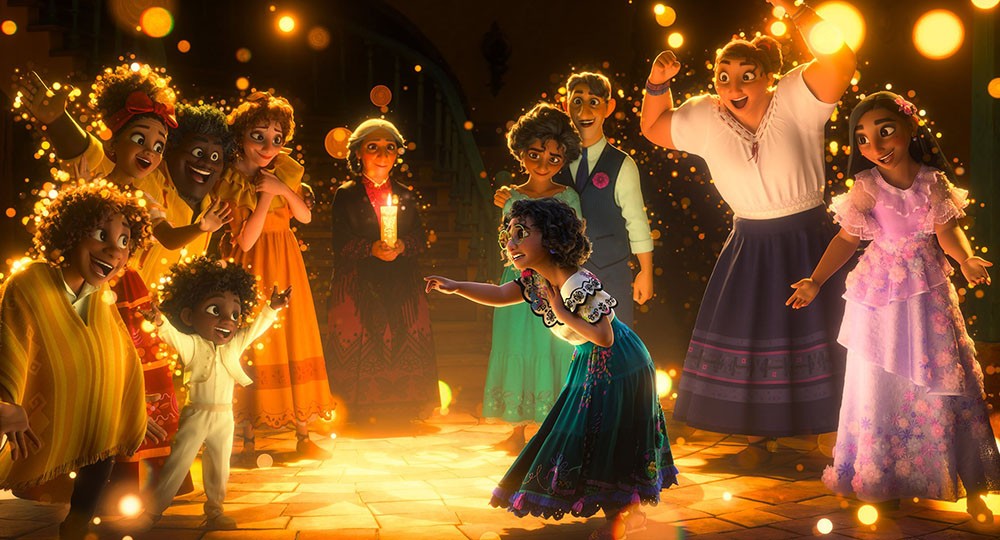
Right as I became supervisor and the visual development window opened, an urgent request landed: tag, classify, and catalog every character modeling asset from Encanto and its short (unannounced), down to each variant, accessory, outfit, and character prop. The studio's internal repository needed it, and the work had no clean path.
It was a manual task. Every model opened one at a time, inspected, labeled against the established taxonomy rules operating at the studio, filed, saved, and started over. Over 2,500 assets to tag. Conservative estimate: eight weeks, probably more, of tedious manual unexciting labor. No dedicated tech support and no pipeline investment were available to compress it, since the studio was running Strange World in full production at the time and every technical resource was committed to that show.
The timing was the real problem. Eight weeks of manual cataloging was eight weeks out of the visual development window for Asha, Wish's main character. Preproduction of visdev exploration doesn't pause, it can't, so if I wanted to get involved in early visual development, I needed to find a way to expedite that task somehow.
THE APPROACH
Building the tool
The task as it was handed to me was workload. The way I treated it was leverage. Tagging 2,500 assets was real work, but it was also the only window where automating that work could buy me the time I needed for Asha. This was mid 2021, before any notion of ChatGPT, Claude, or "vibe coding," so the only path was building the thing in Python directly. VS Code, no Copilot. I wrote a Python auto-tagging tool that classified assets by reading each Maya scene's asset contents directly in batch. Asset type, variant, accessories, garments, props: the scene structure already contained enough signal to classify automatically by geometry name, so that was a starting point, then a layer of programmatic interpretation on top, then funneling and adapting the data to the studio's established taxonomy, and all presented to the user, me in this case, in a UI that allowed me to make edits on the freshly auto-tagged assets in bulk, for final delivery to Dpix, the studio's content and asset library catalog.
Inside a week: 3 days for coding the tool, half a day for editing and supervising the tagging, and the work was done. All character assets from both productions were tagged and delivered. I felt very proud of the work done, the success of my self-established challenge, and my own execution time.
Additionally, the tool wasn't only a one-off script. I cleaned it up so other show supervisors could run it against their own libraries. What started as a personal bottleneck turned into department infrastructure that outlasted my time on the show.
Earning the visdev assignment
With cataloging collapsed from months to days, I used the reclaimed time to immediately jump into the anticipated collaboration with Bill Schwab on Asha. Bill's 2D designs were already in circulation, the kind of early visdev that carries the concept artist's voice intact and invites collaboration rather than asking for execution. Working with him on Asha was the second time we partnered on a character, after Encanto, and the loop settled into the same shape that had worked there. The 2D inspires the sculpt, the sculpt opens space for the AD to push further, and the silhouette finds itself somewhere neither of us alone would have placed it.
Sabino started in that same window. I did an early 3D exploration of him alongside Asha, working from Bill's first pass at the character. Then the script evolved, the design shifted toward a much older version of Sabino, and by the time the new direction landed I was already pulled deep into my supervising duties. The character continued in the team's hands.
Wish's visual target was a world inspired by watercolor illustration, deliberately flat and stylized, painterly, and graphic but without compromising the shapes too much. Ultimately, it was the movie celebrating the 100th anniversary, so the design language had to carry the studio's signature style.
Production
Team of seven fantastic Disney modelers, top notch crafters and fully remote. Suzan Kim picked up the older Sabino design and carried him through to final, making the character her own. At that moment, my job was purely vision alignment: funneling what the directors and Bill needed emotionally from each character, and how that applied to shapes, forms, and silhouettes. Then translating that into direction clear enough that each artist could bring their own craft to the work. Remote made that harder sometimes, but at the same time allowed the limitations to flourish as a medium for an easy live drawover process, even during Zoom calls. A lot of small calibrations that would have happened at someone's desk in a studio hallway had to become explicit conversations over the shared screen.
During production time, I continued advocating for the low-res cage plus creasing workflow I'd pushed on Encanto. This method allowed the team and myself to focus more on the shape work, less concerned about topology cleanliness, since most of it would come almost for free due to the nature of its workflow, especially when combined with a solid universal base mesh and its very specific topological landmarks. On Wish it found its permanent footing, and the rest of the character department adopted it and benefited from its rewards during this production.
At some point approaching the last sprint of the project, I had the opportunity to join Meta, to face new challenges and step up, not only on project complexity in personally unknown territory and field, but also on my career as Avatar Art Lead, and later as Art Director. Due to this departure, I had the privilege to share my role and supervising credit with my talented friend, Alena Wooten-Loftis, who carried, guided, and took care of the team for the remaining work through to final.
Wish released November 22, 2023, as Disney's centennial celebration. One last bow for this incredible project, and for my time at my dream job at Disney, was the opportunity to celebrate its Wrap Party, not only with my friends and colleagues, but also with my older girl Julia, at the time 6 years old, born during the production of Ralph Breaks the Internet and credited there as a production baby, and my youngest, Gemma, who carried on the family tradition with her own production baby credit on Wish. A forever Disney memory!.