Character Modeling Supervisor & 3D Visual Development
2019-2021
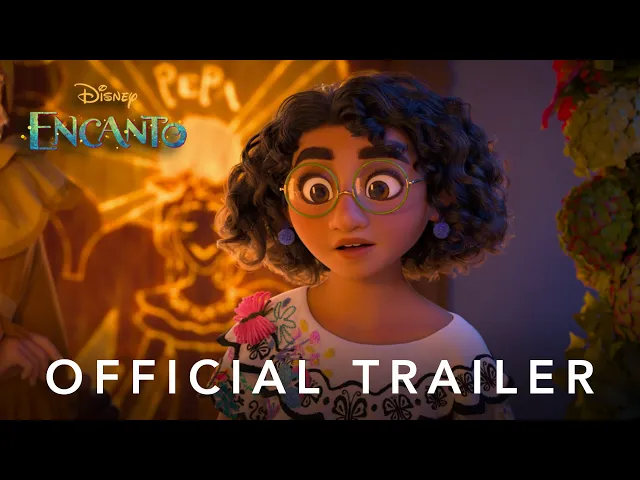
Disney - Encanto
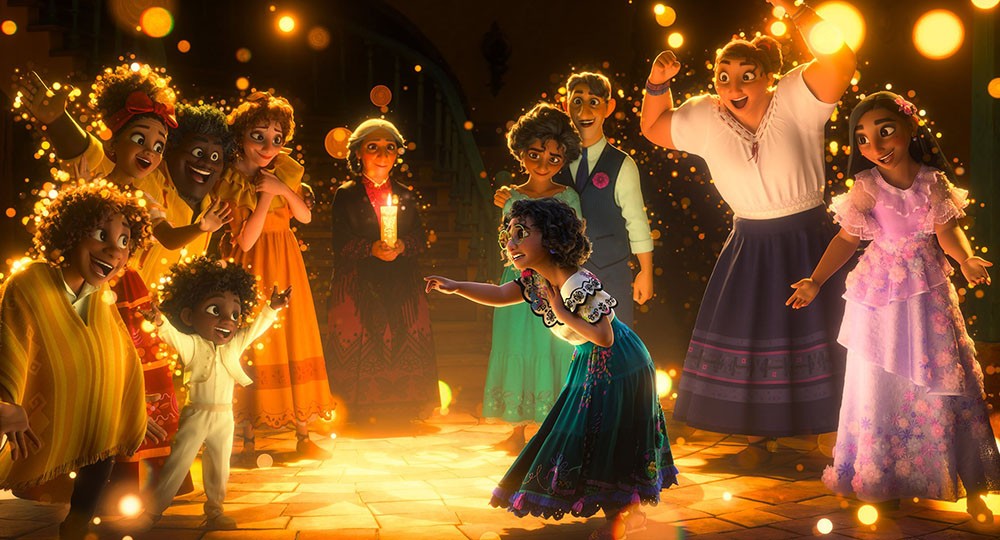
Disney Encanto: Building the Familia Madrigal
TLDR: Character Modeling Supervisor on Disney's 60th feature. I joined two months into visual development, with early sculpts strong but the directors still searching for the style that would carry the story's emotional weight. I sat in on director reviews, read the room, and proposed anchoring the cast through Abuela Alma, whose age and emotional gravity demanded naturalistic proportions that graphic stylization alone couldn't carry. Once the balance landed on her, the rest of the Madrigals evolved from that reference. I supervised a team of nine through production: the full Familia Madrigal across three generations, background characters held to the same quality bar as the leads, and multiple animal species. A feasibility test for Camilo's early shape-shifting concept proved the universal base mesh I had introduced to the studio years earlier, now the human-character standard since Frozen II, held up to shapes it was never meant for. Encanto was the third Disney film running on that topology. VES Award for Mirabel. Academy Award for Best Animated Feature.
DETAILS
Studio: Walt Disney Animation Studios
Project: Encanto (60th Disney animated feature, released November 24, 2021)
Role: Character Modeling Supervisor
Team: 9 world-class character modelers
Key collaborator: Art Director Bill Schwab (first collaboration, continued into Wish)
Tools: Maya, ZBrush, Python
Year: 2019-2021
Shipped: Full Familia Madrigal across three generations, background characters elevated to featured quality, multiple animal species (toucans, capybaras, jaguars, donkeys, coatis), low-res cage plus creasing workflow adopted by the department, biped-to-animal shape-shifting feasibility test for Camilo
Awards: VES Award for Outstanding Animated Character (Mirabel), Sergi as co-winner. Academy Award for Best Animated Feature. Golden Globe, BAFTA, Annie, and Grammy wins for the film.
Links: IMDb
THE CONTEXT
Encanto is Walt Disney Animation Studios' 60th animated feature, directed by Jared Bush and Byron Howard, with Charise Castro Smith as co-director. A musical set in Colombia, following the Madrigal family across three generations, built around a story that demands genuine emotional proximity to the characters.
I joined the production as a Visual Development Modeler, and was cast to become Character Modeling Supervisor with Claudia Chung Sanii (Character CG Supervisor) and Scott Kersavage (VFX Supervisor). I came on two months into the visual development process. The film had been iterating on its early sculpts with Art Director Bill Schwab and the directors already for a while, exploring where the cast should sit visually, still searching for the style that would carry the story's emotional weight. At Disney, that kind of searching at this stage is not unusual. It's often how the right direction gets found.
THE CHALLENGES
Encanto's story asks the audience to feel genuine empathy for the Madrigal family. That kind of emotional proximity places real demands on how the characters look in 3D.
At Disney, character design is never linear. Visual Development creates 2D designs, modelers translate them into 3D, and then it goes back and forth: draw-overs on top of the sculpt, further sculpting, more draw-overs, until the character is ready to land. Modelers have a big hand in finding the overall look alongside Visual Development, the translation from 2D into 3D is never a direct one, and the back and forth between Art Director and 3D modeler is where the character really materializes.
The early work had explored more stylized anatomy, with simpler forms and graphic shapes and proportions. The sculpts were strong and visually coherent, but the directors were still searching. The nuances and depth of the story weren't yet represented by the visual language in the maquettes. Nobody could say exactly why. The characters just weren't fully landing yet.
Joining two months in, stepping into a visual direction already in motion with the directors still looking for the style, meant reading a room that had already been in conversation for a while, without the history of the earlier reviews loading my interpretation. Not the easiest entry point, but in some ways an advantageous one.
THE APPROACH
Reading the room
Instead of jumping straight into production, I stepped back. I started attending director reviews as a fly on the wall. Present in the room, not yet part of the conversation, just watching and listening. Faces, comments, laughs, silences. What landed, what didn't, what made the directors lean forward, and what made them politely nod without really engaging. The fresh eyes of a late arriver turned out to be an advantage rather than a handicap. I had no prior context loading my interpretation, which meant I could read the room without the noise of earlier rounds.
The work at this level is not just craftsmanship as a result of twenty years of experience building characters. It's also a skill of understanding the room, being observant of the directors' reactions, their faces, their comments, and even their laughs when a character is presented or pitched to them, reading what actually landed versus what they politely accepted. It's an intuition of reading the room. It's a skill you develop over years of experience, not something you can learn straight from school.
That observation built an intuition about where the characters needed to go. Not more graphic, not more realistic. Somewhere specific in between: grounded enough in real anatomy that emotional performances would land believably, while keeping the stylized language that Bill and the directors had already set as the foundation of the film.
Finding the balance through Abuela
With that intuition in hand, I proposed starting from Abuela Alma. She's the matriarch, the weight of the family, the character carrying the generational depth of the story in her body language and her face. Her age and her emotional gravity demanded naturalistic proportions that graphic stylization alone couldn't carry. If we could find the balance on Abuela, every other Madrigal would have a reference to build against.
Abuela's model became the benchmark, shaped through the iteration loop with Bill that the film ran on every character. The 2D inspires the sculpt, the sculpt opens space for the AD to push further, and the silhouette settled on Abuela in a place neither of us alone would have placed it initially. From her, we evolved Mirabel, Isabela, Luisa, Dolores, Camilo, and the rest of the family toward human anatomy while keeping the graphic spirit of the design language. The shift was visible in necklines, facial structure, body proportions, cheekbones and jawlines, and the way the characters breathed on screen. Each kept the graphic spirit of the design language, and gained enough naturalistic grounding that the story's emotional moments could land with real weight.
Abuela unlocked the whole cast. Once the tone was set through her, the rest of the Madrigals followed naturally, each feeling like part of the same family, the same house, the same design language.
Production: the full cast
Once the visual direction landed with the directors, production started in earnest. Team of nine world-class Disney character modelers, every one of them an extraordinary artist. My job as supervisor was giving them the space and autonomy their talent deserved while keeping the directors' vision and Bill's art direction aligned across every character. I worked upstream with Jared, Byron, Charise, and Bill to understand what they needed emotionally from each role, then translated that into direction clear enough that each artist could bring their own craft to the work.
The Familia Madrigal. The complete main cast across three generations, each character with distinct personality, body type, age, and presence, all unified by the design language we'd anchored in Abuela. The family you see on screen is a cast of individuals that feels like one family. That cohesion doesn't happen by accident.
Background and crowd characters. Encanto's town is itself a character. The community gathers in the plaza, musical numbers fill the streets, and every person on screen has to hold up to the camera getting close. We built every background character to a standard where they could receive a line of dialogue or step into a musical number without breaking the film's quality bar. No character shipped at a lower standard because of screen time ranking. That's one of the decisions I'm most proud of on this production.
Animals. The film needed multiple species: toucans, capybaras, jaguars, donkeys, coatis. Each species brought its own topology challenges, its own deformation requirements, its own proportional puzzles. The team rose to every one of them, and all of them held the same quality bar as the human cast.
Workflow: low-res cage plus creasing
Encanto was where I introduced the low-res cage plus creasing workflow to the Disney character modeling team. The philosophy had matured on earlier personal work and on Riot Games collectibles: fewer, smarter edges doing more work, with creasing handling edge sharpness instead of dense holding edges. The artists could focus on appeal and shape work, rather than topology maintenance.
The adoption across the team was positive and fast. The creasing workflow became part of how we built characters on Encanto, then carried forward to Wish, and stayed as standard practice among most of the character department.
Proving the topology: Camilo's shape-shifting
Early in development, Camilo's shape-shifting power wasn't limited to family members. The concept had him transforming between different animal species as well. The directors wanted to know if it was technically possible without rebuilding the character from scratch every time.
I ran the feasibility test. Mirabel's mesh, which like the rest of the cast ran on the base mesh I had introduced to the studio back on the Gigantic (canceled feature) days, the one that during Frozen II became the standard for human characters, transformed from her human shape into a horse, then into a donkey, then into a capybara, all from the same underlying base mesh. No retopology. Just the same universal biped being pushed into shapes it was never explicitly designed to carry.
The animal shape-shifting got cut from the final film, but the test proved something bigger than Camilo's moment. The universal biped topology I'd created personally years earlier, and that had first shipped on Frozen II, was holding up to uses far beyond what it was ever meant for. Encanto was the third Disney film running on that base mesh. At some point, what starts as a personal project quietly becomes the studio's universal infrastructure.
Shipping, and what it actually meant
Encanto released November 24, 2021, and became a global cultural phenomenon almost overnight. "We Don't Talk About Bruno" hit number one across the world, the soundtrack ran on repeat in a lot of households for months, and the Madrigals took up real cultural space in a way I had not expected going into a post-pandemic release window.
The film won the Academy Award for Best Animated Feature at the 94th Academy Awards, the Golden Globe for Best Animated Feature Film, the BAFTA for Best Animated Film, Annie Awards (Best Character Animation, Best Music, Best Storyboarding), and Grammy wins including Best Song Written for Visual Media for "We Don't Talk About Bruno." The recognition that hit closest for me, and for the team, was the VES Award for Outstanding Animated Character in an Animated Feature for Mirabel, shared with Kelly McClanahan, Mary Twohig, and Jose Luis "Weecho" Velasquez. The VES is the industry's top recognition for character work in animation, given by the Visual Effects Society, and Encanto took four wins that night, tying with Dune for the most at that ceremony.
What shipped in terms of craft was a full cast of Madrigals that felt like one family, a town full of background characters built to the same quality bar as the leads, multiple animal species carrying the same design language, a creasing workflow that stayed in the department long after I left, and a feasibility test for shape-shifting that proved a piece of personal topology work had quietly become studio infrastructure across three films. None of that ships without the team.
The team of nine who carried this project with me, world-class modelers every one of them. Bill Schwab for the visual partnership that started here and continued into Wish. Claudia Chung Sanii and Scott Kersavage for picking me to supervise in the first place, a trust decision I do not forget. Jared, Byron, and Charise for directing a story that demanded characters to be built in a specific way, and for giving us the space to find that specific way together. Encanto remains one of the most meaningful credits of my Disney chapter, and the show where the pattern of reading the room, anchoring the cast through one character, and letting the rest of the family evolve from there, became something I could name as craft rather than intuition.